

- Our company
-
Products

-
 EOD/C-IED,
MINE CLEARANCE
-
 PERSONAL PROTECTIVE EQUIPMENT (PPE)
-
 EXPLOSION CONTAINMENT AND PROTECTION
-
 NEUTRALIZATION BY DISRUPTORS AND FUSE EXTRACTORS
-
 NEUTRALIZATION BY INITIATORS
-
 INITIATORS AND FIRING LINES
-
 WATERJET CUTTING
-
 EOD TOOLS AND HOOK & LINE
-
 REMOTE DISPLAY AND MIRRORS
-
 X-RAY INSPECTION
-
 DETECTION AND IDENTIFICATION OF SUBSTANCES
-
 METAL DETECTION
-
 DEMINING ROBOTS
-
 RESPONSE VEHICLES
-
 TRAINING
-
-
 TACTICAL
GEAR
-
 PERIMETER
PROTECTION
-
 DEFENSE MOBILE
AD HOC NETWORKS
-
- Export
- Brands
- News
- Contact




NIJ 0117.01 Certification
NIJ 0117.01 Certification: Certified Protection Against Explosive Threats
The NIJ 0117.01 standard is the only international standard specifically designed for bomb suits. Issued by the National Institute of Justice (NIJ), it ensures a level of protection and performance that meets the requirements of Explosive Ordnance Disposal (EOD) professionals.
What does the standard cover?
The standard focuses on protection against typical Improvised Explosive Devices (IEDs) and covers a range of requirements, as outlined below:
- Fragmentation: focusing on projectiles representative of those produced by an improvised explosive device.
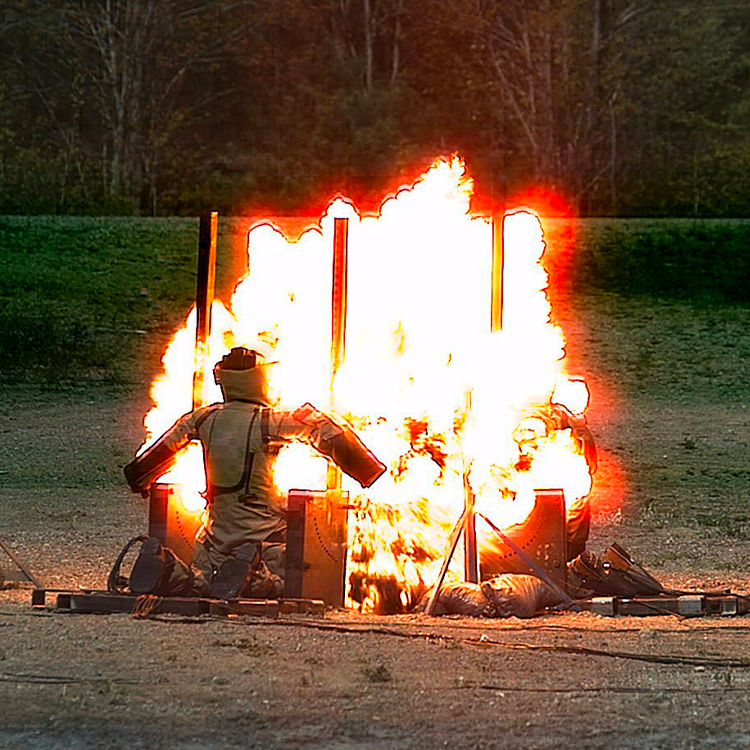
- Blast integrity: assessing how well a bomb suit maintains its integrity following an explosion.
- Impact protection: covering the spine and head.
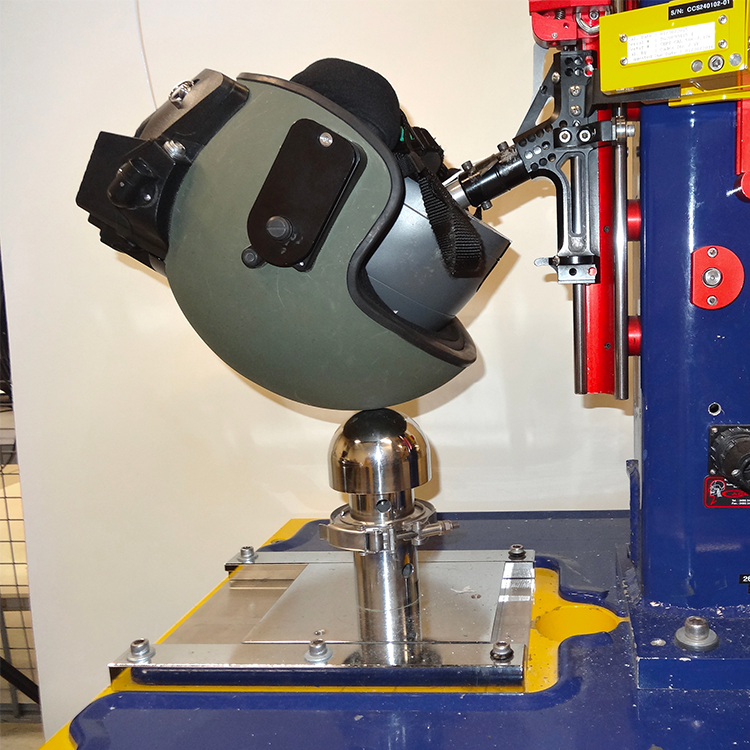
- Helmet retention: ensuring that the helmet remains securely in place during an explosion.
- Helmet penetration resistance: protecting the head in the event of a fall onto a sharp object.
- Flammability: including requirements for flame resistance, afterflame time and flaming droplets.
- Ergonomics: ensuring mobility and flexibility.
- Optics: covering visor clarity and field of vision.
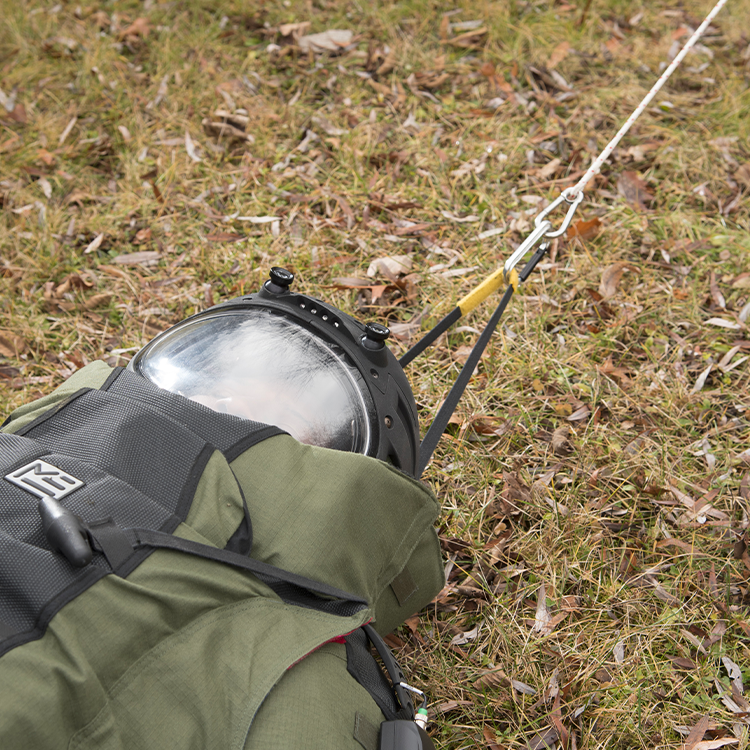
- Emergency rescue: facilitating the extraction of an injured technician and ensuring their safety.
- Additional factors: including electrostatic discharge, slip resistance and labelling.
- Quality assurance: independent inspections and audits of manufacturing facilities.
To obtain certification, both the bomb suit and helmet must meet all the requirements of the standard. Testing must be carried out by independent laboratories accredited by the Safety Equipment Institute (SEI).
Unlike STANAG 2920 and MIL-STD 662F, which only assess material resistance to fragmentation threats, NIJ 0117.01 covers a much broader range of threats and performance criteria.
Choosing a NIJ 0117.01-certified bomb suit means selecting equipment whose protection and operational performance have been rigorously tested and independently verified.
 Request an access